
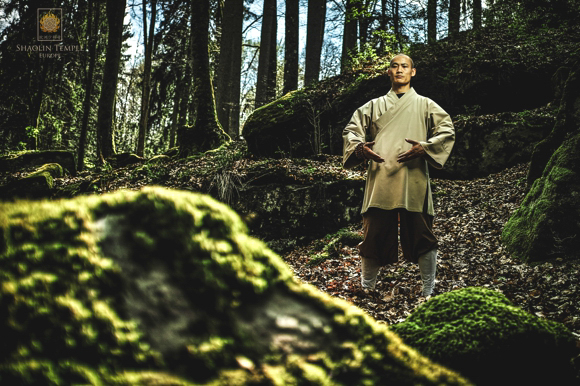
What is Shaolin Qigong?
Shaolin Qigong can be described as ‘the practice of energy awareness, cultivation, circulation and development of a fruitful life’. Shaolin Qigong is medicinal, martial and spiritual.
Shaolin is one of the oldest known forms of Qigong. Legends say that around 500 AD, a monk named Bhodhidharma settled at a temple that is known as the Shaolin Temple in Dengfeng, China. When he passed away, he left behind a manual called Yijinjing which some have translated in English as Muscle Tendon Changing Classics. This manual was then used by the monks to greatly increase their vitality and extend their martial arts capability. In the past couple of decades, many variations of the Shaolin Baduanjin Qigong and Yijinjing forms have appeared, which form the basis of much Qigong taught today.
Shaolin Qigong can be classified into “nei gong” and “wai gong”, or internal art and external art. Internal art focuses on Chan meditation to cultivate the heart and nature. It has obvious evidence in preventing or overcoming chronic illness, like heart disorders, mental breakdown and memory problems.
One of the most important exercises in Qigong is to develop the awareness and understanding of Qi. We can write and talk about it all day, but it doesn’t mean anything until you can feel it. If you want to seriously learn Qigong, you need to become aware of Qi through continued practice, be able to feel it, and experience its many manifestations in your body and your essential being.
Caroline will be offering Shaolin Qigong for students who have already attended her more gentle and introductory Qigong Flow for Well-Being classes and who wish to pursue their studies further. Classes will continue to run through February and March on Monday evenings and Saturday mornings. Once the weather improves, our intention is to move outdoors and practice in nature.